Find your Local

We're a national brand with a local team in your area.
Select the location below that's closest to you:
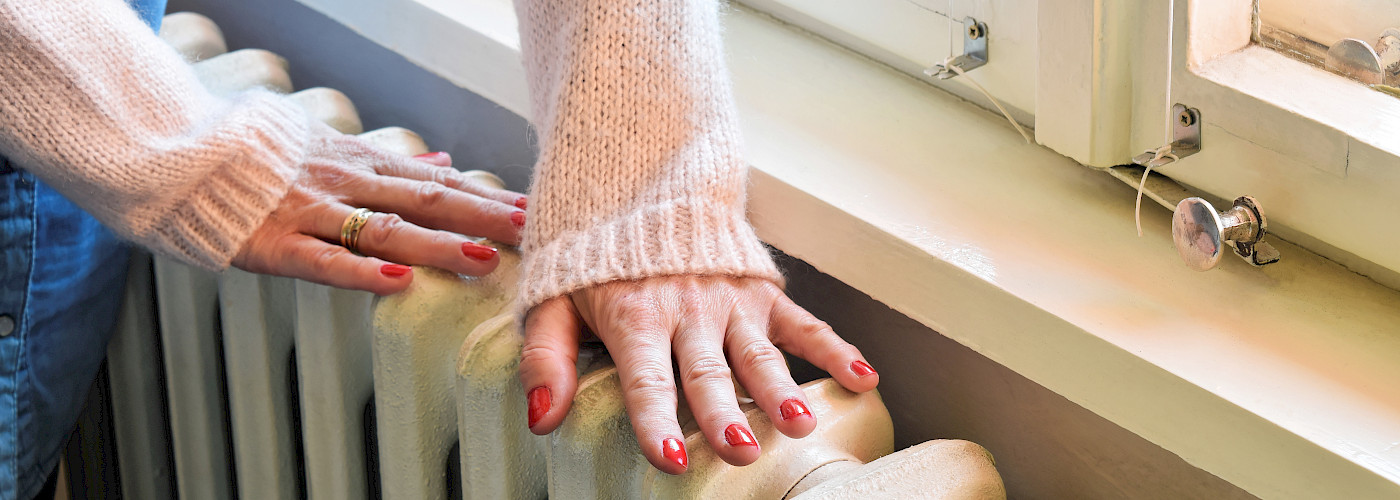
If you’re thinking about replacing your gas boiler with an electric heating system, one of the first questions you’re likely to ask is: do I need to replace all my radiators as well?
The answer is: not necessarily.
It depends on which type of electric heating system you choose. This is an important distinction because an electric boiler and electric radiators are two very different ways of heating a home.
If you replace your gas boiler with an electric boiler such as Luthmore, you may be able to keep your existing wet radiators. If you move from a wet central heating system to individual ELKATHERM® electric radiators, your existing radiators will be replaced as part of the change.
Understanding the difference can make it much easier to decide which system is right for your home.
Yes, an electric boiler can heat water in much the same way as a gas boiler, which is then circulated around the existing pipework and radiators. This means that if you have a conventional wet central heating system and replace the gas boiler with an electric boiler, you might not need to replace your radiators at all.
This is one of the attractions of a Luthmore system. Rather than ripping out the entire wet central heating system, the boiler can be replaced with an electric alternative while continuing to use the home’s existing radiators and pipework, subject to the condition and suitability of the existing system. In other words, the chance can be much less disruptive than people sometimes assume.
This is where things can get confusing. An electric boiler heats water. That hot water then travels through your existing central heating pipework to your radiators, just as it does with a traditional gas boiler.
Electric radiators don’t use a wet central heating system at all. Each radiator is an individual heating appliance connected directly to the electrical supply. You could think of the two approaches as:
Electric boiler: electricity → boiler → hot water → existing radiators
Electric radiators: electricity → individual radiator → room
Both are forms of electric heating, but they work in fundamentally different ways.
Not usually. If you’re replacing a gas boiler with a Luthmore electric boiler, your existing radiators can potentially remain in place. The important question is whether the existing radiators, pipework, and wider heating system are in good enough condition and appropriately sized for the new system.
There may be situations where replacing individual radiators makes sense. For example, an old or corroded radiator may be approaching the end of its life, or a particular room may benefit from a larger radiator.
You don’t automatically need to replace every radiator simply because you’ve changed from gas to electricity. This can make a Luthmore electric combi boiler a particularly interesting option for homeowners who already have a good wet central heating system, but want to move away from gas.
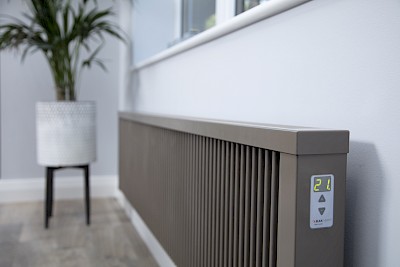
This is a completely different approach. ELKATHERM® radiators are standalone electric heating appliances. They don’t require a boiler, water, radiators connected by pipework, or a traditional wet central heating system. This can be particularly useful where you want to move away from a boiler and wet central heating altogether.
There isn’t one answer that suits every property. One of the biggest advantages to having individual ELKATHERM® electric radiators is the level of room-by-room control they provide. Rather than heating the whole house through one central system, each radiator can be controlled independently.
With an ELKATHERM® electric heating system, there’s no boiler or wet central heating pipework to maintain. With ELKATHERM®, you are dealing with individual electric heating appliances rather than a system containing a boiler, pump, water, valves, and extensive pipework. For many properties, particularly where the existing wet system is old or where installing or replacing a boiler would be complicated, moving to individual ELKATHERM® electric radiators makes a lot of sense.
Potentially, because you aren’t paying to replace a whole house full of radiators. If your existing wet radiators are in good condition, a Luthmore electric boiler can allow you to retain them, reducing the amount of work required during the conversion.
However, the purchase price of the heating equipment isn’t the only thing to consider. Running costs, controls, hot water requirements, your electricity tariff, and how you use your home all mater as well. This is why we wouldn’t recommend choosing an electric heating system solely on the basis of whether you can keep your existing radiators.
If you’re moving away from gas completely, the old boiler can decommissioned and removed, with the existing gas supply dealt with appropriately by a qualified professional. With an electric boiler, the wet central heating system can remain in place.
With ELKATHERM®, the wet system can be removed if it is no longer required, leaving you with individual electric radiators instead. The right approach depends on the property and what you are trying to achieve.
Yes, and it is a more significant change than simply replacing the boiler. You are effectively moving from a wet central heating system to a fully electric heating system made up of individual room heaters.
This means the project needs to be considered as a whole: the number and size of radiators, electrical supply, controls, and the heating requirements of each room all need to be considered. It isn’t simply a case of taking a gas radiator off the wall and putting an electric one in its place.
This entirely depends on the property and how you want to use your heating. If you already have a good wet central heating system, and want to retain your existing radiators and pipework, an electric boiler such as Luthmore can be a relatively straightforward route away from gas.
If you want to get rid of your boiler and wet central heating system altogether, individual ELKATHERM® electric radiators offer a completely different approach, with independent heating and controls in each room.
Both options solve the problem in different ways.
The short answer is it depends on the electric heating system you choose.
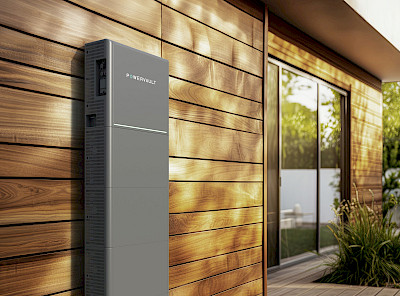
With a Luthmore electric boiler, you can keep your existing wet radiators and pipework. The boiler changes, you gain battery storage, and the heating distribution system can remain.
With ELKATHERM® electric radiators, you are moving away from wet central heating altogether, so the existing radiators are replaced with individual electric heating appliances.
We look at your property and how you actually use it before recommending a system. The aim isn’t simply to replace a gas boiler with the first electric product available. It’s about finding the right way to heat your home, while considering installation, control, hot water, and the cost of running the system.
If you’re considering moving from gas to electric heating and aren’t sure which way to turn, get in touch with us today and we will help you understand the options available for your home.