Find your Local

We're a national brand with a local team in your area.
Select the location below that's closest to you:

Heat pumps receive a great deal of attention whenever the conversation turns to reducing carbon emissions from homes. They are often presented as the default solution for homeowners looking to move away from fossil fuels and lower their environmental impact, however, heat pumps are not the only route to net-zero heating. In fact, heat pumps are not suitable for every property, every budget, or every homeowner.
Many UK homes face challenges such as limited outdoor space, unsuitable existing heating systems, planning restrictions, high installation costs, or concerns about disruption during installation. As a result, a growing number of homeowners are exploring alternative ways to reduce their carbon footprint without installing a heat pump.
With the right combination of technologies, it is entirely possible to create a low-carbon, highly efficient home that relies little or not at all on fossil fuels.
Net-zero heating does not necessarily mean using no energy. Instead, it means reducing or offsetting the carbon emissions associated with heating your home.
Traditionally, gas, oil, and LPG boilers burn fossil fuels to produce heat. Every time the heating comes on, carbon dioxide is released into the atmosphere.
Electric heating is different. While electricity from the grid still carries some carbon emissions, the UK’s electricity network is becoming cleaner every year as more renewable energy sources come online. When combined with solar panels and battery storage, electric heating can dramatically reduce the carbon impact of a property. For many households, achieving net-zero heating is less about a single technology, and more about creating an integrated energy system.
Before considering any heating technology, it makes sense to reduce the amount of heat your home requires in the first place. A well insulated property needs less energy to stay comfortable throughout the year. Loft insulation, cavity wall insulation, double glazing, and draught-proofing can all reduce heat loss and improve overall efficiency.
Every unit of energy saved is a unit that does not need to be generated, stored, or purchased. Improving the thermal performance of a home is often the most cost-effective step towards lower-carbon heating.
Once heat demand has been reduced, alternative heating technologies become even more practical and affordable.
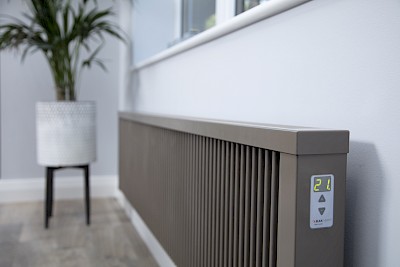
Modern electric radiators have evolved significantly over the past decade. They bear little resemblance to the basic electric heaters that many people remember from years ago.
Our advanced ELKATHERM® electric radiators use intelligent controls, programmable heating schedules, and precision thermostats to deliver heat exactly where and when it is needed. They feature a dense ceramic fireclay core, which provides warm, comfortable, responsive heating while helping to minimise energy consumption. Unlike gas central heating systems, electric radiators require no pipework, boiler, flue, or annual servicing. They can be controlled individually, allowing homeowners to heat occupied rooms without wasting energy elsewhere in the property.
When powered by renewable electricity, electric heating can form a key part of a net-zero strategy,
Solar panels allow homeowners to generate their own renewable electricity directly from sunlight. Although solar generation is highest during spring and summer, modern systems can still contribute valuable energy throughout the year. Any electricity generated and used within the home reduces reliance on grid electricity and lowers overall carbon emissions.
For homes using electric radiators, solar panels can offset a significant proportion of annual heating related electricity consumption. During sunny periods, the electricity generated can be used directly by heating systems, appliances, and hot water solutions. As solar panel prices have become more affordable, they have become one of the most effective tools available for homeowners pursuing net-zero goals.
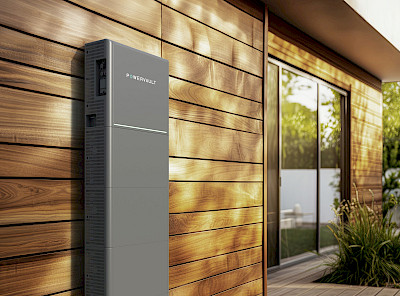
One of the challenges with solar power is that generation does not always coincide with household demand. Battery storage helps solve this problem by storing excess solar electricity for use later in the day. Instead of exporting all surplus energy to the grid, homeowners can retain more of their renewable generation and use it when needed.
Systems such as the Tesla Powerwall allow households to maximise their self-consumption and reduce dependence on imported electricity. They can also be charged using lower cost overnight tariffs when renewable electricity is abundant on the national grid. This stored energy can then be used during peak periods, helping to lower both costs and carbon emissions.
The combination of solar panels and battery storage creates a much more flexible and resilient energy system.
Heating water often accounts for a significant proportion of household energy consumption. Traditionally, this has been achieved by using gas boilers and hot water cylinders, however, thermal storage technology offers a modern alternative.
Sunamp heat batteries store thermal energy in a compact unit and provide hot water on demand without requiring a conventional cylinder. They can be charged using solar electricity or low-cost, off-peak energy, allowing homeowners to take advantage of renewable generation and time-of-use-tariffs. As they store heat rather than water, Sunamp systems can often fit into spaces where traditional cylinders would be impractical.
For many households, combining electric heating with thermal storage creates a complete gas free solution for space heating and hot water.
Smart tariffs are becoming increasingly important in the transition towards low-carbon homes. Many energy suppliers now offer time-of-use tariffs that provide cheaper electricity during periods of lower demand. Homeowners with battery storage and thermal storage systems can use these tariffs to charge their systems when electricity is both cheaper (and often greener).
This approach helps reduce energy bills while supporting greater use of renewable energy across the grid. Rather than relying on fossil fuels throughout the day, households can strategically use stored energy when it is most beneficial.
Achieving net-zero heating without a heat pump is rarely about a single product or technology. The most successful solutions combine several elements working together:
Each technology contributes towards reducing your reliance on fossil fuels and lowering household emissions. The result? A home that is comfortable, efficient, and better prepared for the future of energy.
Heat pumps can be an excellent solution for some properties, but they are not the only path to net-zero heating.
For homeowners seeking a less disruptive, more flexible, or more affordable route to reducing their carbon emissions, modern electric heating, solar panels, battery storage and thermal storage technologies offer a compelling alternative.
As the UK’s electricity grid continues to become cleaner and renewable technologies become increasingly accessible, more households are discovering that it is entirely possible to create a low-carbon home without installing a heat pump.
Net-zero heating is ultimately about reducing emissions, increasing efficiency, and making better use of renewable energy. With the right combination of technologies, that goal can be achieved without a heat pump and without compromising on comfort.