Find your Local

We're a national brand with a local team in your area.
Select the location below that's closest to you:

If your hot water cylinder is getting old, you’re renovating your home, or you’re looking at moving away from gas or oil, you may be wondering what to replace it with. A traditional hot water cylinder is the obvious choice. It’s been used in UK homes for decades and, when correctly sized and installed, does the job perfectly well. But there is another option.
A Sunamp Thermino heat battery stores heat rather than storing a large tank of hot water. It takes up considerably less space, can make good use of cheaper electricity, and can work alongside technologies such as solar PV and electric heating.
So, is a Sunamp actually better than a hot water cylinder?
The honest answer is that it depends on your home. There are situations where a conventional cylinder makes perfect sense, but there are also plenty of homes where a Sunamp can be a much better solution.
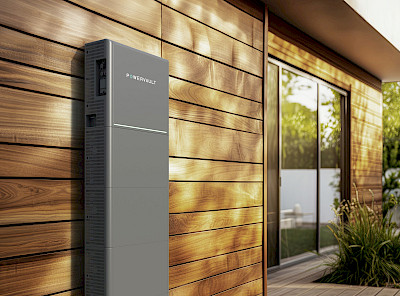
A Sunamp is a thermal energy storage system designed to provide domestic hot water. Unlike a conventional cylinder, it doesn’t store a large volume of hot water. Instead, it stores thermal energy using a phase change material inside the unit. When the Sunamp is charged, the material stores heat. When you turn on a hot tap or shower, that stored heat is used to heat fresh water as it passes through the system.
It’s a clever idea, because you’re essentially storing the energy needed to produce hot water, rather than storing the hot water itself. This makes the system considerably smaller than a conventional cylinder, while still being capable of providing plenty of hot water.
A traditional hot water cylinder is much more straightforward. Water is stored inside the cylinder and is heated by an immersion heater, boiler, or another heat source. Once heated, the water remains in the cylinder until it is used. This means there is always a supply of hot water ready to go, but it also means you need somewhere to put a fairly large tank.
Modern cylinders are well insulated, so heat losses are much lower than they were with older systems. However, whenever you store a large volume of hot water, there will inevitably be some heat loss over time. A Sunamp takes a different approach by storing the heat energy instead.
Yes, and this is one of the biggest reasons homeowners choose a Sunamp. A conventional cylinder needs to be large enough to physically hold its water. Depending on the size of the household, this can mean a substantial cylinder taking up an entire airing cupboard or utility space.
A Sunamp can store a comparable amount of useful heat in a much smaller footprint. This can make a huge difference in a smaller home. Instead of losing a large cupboard to a hot water cylinder, the space can potentially be used for something else. It’s also useful during renovations, where finding a suitable location for a large cylinder can sometimes be surprisingly difficult.
Yes. A Sunamp Thermino systems can provide fresh hot water using the property’s incoming mains water supply. This means your hot water pressure isn’t simply determined by the height of a storage tank in the loft. This can be a significant advantage, particularly for showers.
Of course, the actual flow rate you get will still depend on your incoming mains supply and the plumbing in your property. A heat battery can’t compensate for a poor incoming water supply.
One of the limitations of a conventional cylinder is that you have a fixed volume of hot water available. If you have a full cylinder and everyone in the house has a shower, somebody runs a bath, and the dishwasher or washing machine uses hot water, you will eventually reach the point where all the stored hot water has been used. The cylinder then needs time to heat more water. This isn’t usually a problem if the cylinder has been correctly sized for the household, but it can become frustrating if your hot water demand has increased since the system was installed.
A Sunamp works differently, because it doesn’t rely on storing a large tank of hot water. The heat battery is sized according to your household’s requirements, and fresh water is heated as it passes through the system. That means choosing the correct size is still important. A family of five with several bathrooms will have very different hot water requirements to a couple living in a two bedroom apartment.
It’s important to be a little careful with this question, because neither system creates energy. Both need electricity or another heat source to charge them. The difference is what happens to that energy once you’ve heated the system.
A conventional cylinder stores hot water, and, despite modern insulation, some heat is gradually lost to the surrounding area.
A Sunamp stores thermal energy within its phase change material and is designed to have very low standing heat losses. That means you aren’t continually paying to keep a large tank of water hot when you aren’t using it. For a household using hot water throughout the day, that can be a useful advantage.
Yes, and this is one of the areas where heat batteries become particularly interesting. If you are on a time-of-use electricity tariff, you may be able to charge the Sunamp when electricity is cheaper, and use the stored heat later when you actually need hot water.
For example, rather than heating your hot water at the exact moment you have a shower, the system can be charged during a cheaper period and hold that energy ready for use.
A traditional hot water cylinder can also be programmed to heat during cheaper periods, the difference is that Sunamp has been designed specifically around the idea of storing thermal energy efficiently in a compact unit. This makes Sunamp a particularly good fit for homes that are becoming more flexible about when they use electricity.
Yes, a suitable Sunamp system can also be used alongside solar PV. Solar panels tend to generate most of their electricity during the middle of the day, whereas households tend to use the most hot water in the mornings and evenings. Being able to use surplus solar electricity to charge a heat battery gives you another way of making use of your own solar generation. However, you don’t need solar panels to benefit from a Sunamp. A Sunamp can be charged from the electricity grid, including during cheaper off-peak periods, so it can make sense in homes without solar as well.
No. One of the main advantages of the Thermino system is that the heat battery takes the place of the conventional hot water cylinder. There isn’t a need to install a large cylinder alongside it simply to store the hot water. This is what makes the system particularly useful when space is limited.
Instead of having a large tank of water sitting in an airing cupboard, the heat battery stores the energy required to produce your hot water.
It can be. In a smaller house, flat, or apartment, the space taken up by a conventional cylinder can be disproportionately frustrating. You may have an airing cupboard that could be used for storage, but instead it contains a large tank. A compact heat battery can free up some of that valuable space.
It’s not just about the size of the property either. We’ve seen plenty of larger homes where finding a sensible location for a cylinder is difficult due to extensions, renovations, converted lofts, or changes to the layout. In these situations, the physical size of the Sunamp can be just as important as its energy performance.
Generally, the initial installation cost of a Sunamp will be higher than simply replacing an existing cylinder with another conventional cylinder. A traditional cylinder is relatively simple and well-established technology. But the purchase price isn’t the only thing worth considering.
If you’re installing a new hot water system, it’s worth thinking about how much space the system will take up, how you intend to heat your water, what electricity tariff you use, and how long you expect to remain in the property. A Sunamp can also become more attractive if you’re already investing in other electric technologies and want your hot water system to work alongside them. We would always rather tell a customer that a conventional cylinder is the sensible choice than recommend a heat battery simply because it’s the newer technology.
There is nothing wrong with choosing a conventional cylinder. If you already have one that works well, have plenty of space and don’t have any particular need to change the way you heat your hot water, replacing it like-for-like is a perfectly sensible option.
A cylinder can also be a straightforward choice where the existing heating system and plumbing have already been designed around one. There’s no point spending thousands of points changing something that isn’t causing you a problem.
The situation changes when your cylinder is old, you’re carrying out a major renovation, space is limited, or you’re looking at moving towards a more flexible electric heating system. That’s when it’s worth considering whether simply installing another cylinder is really the best long-term solution.
A Sunamp is particularly worth considering when you’re looking for more than simply a replacement hot water tank. It can be a very good option for homes where space is limited, where mains-pressure hot water is important, or where the homeowner wants to take advantage of cheaper electricity.
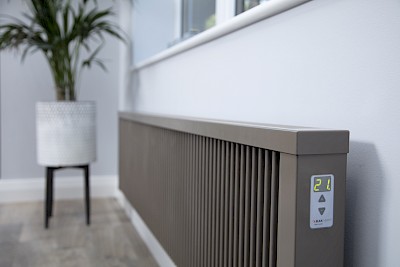
It’s also worth considering if you’re moving away from gas or oil and looking at how all of your home’s energy systems can work together. For example, you might have ELKATHERM® electric radiators providing room heating, a Sunamp providing domestic hot water, and a suitable electricity tariff helping you keep the cost of running both systems under control. The important thing is that each part of the system has been properly designed for the property.
There isn’t one answer that applies to every home. A traditional hot water cylinder is reliable, familiar, and often perfectly adequate. If your existing cylinder is working well and you have plenty of space, there may be little reason to change it. If you’re replacing an old system, short on storage space, or looking for a more modern way of using electricity, a Sunamp Thermino heat battery is well worth considering.
The biggest difference is that a cylinder stores hot water, whereas a Sunamp stores the energy used to make your hot water. This relatively simple change makes it possible to have a much smaller system, very low standing heat losses, and much greater flexibility over when you use electricity.
We don’t believe that every home needs the same heating or hot water system. We look at the property, how it’s used, and what you’re trying to achieve before recommending a suitable solution.
If you’re considering replacing your hot water cylinder and would like to know whether a Sunamp would work for your home, get in touch with our team today and we’ll be happy to talk through the options.