Find your Local

We're a national brand with a local team in your area.
Select the location below that's closest to you:

If you already have solar panels, or are thinking about installing them, your electricity tariff matters just as much as the system itself.
In 2026, the difference between the right tariff and the wrong one could be hundreds of pounds per year. The reason is simple: Energy prices are still high, export payments are improving, and smart tariffs are changing how households use electricity.
We see this every day. The customers who save the most are not just the ones with solar panels, but the ones with the right system and the right tariff working today.
The Smart Export Guarantee is still how you get paid for exporting electricity to the grid, but the market has moved on. Many of the better tariffs now come with conditions; you may need to be a customer, install through the supplier, have an electric vehicle, or have a battery.
Typical figures in March 2026 look like this:
This gap is the key to understanding how to get the most from solar.
Supplier | Export Tariff | Export Rate | Import Tariff | Import Rate |
Octopus Energy | Intelligent Octopus Flux | Up to 32p peak, 24p off peak | Intelligent Octopus Flux | 17p overnight to 40p peak |
Octopus Energy | Octopus Flux | 29p peak, 10p day, 5p night | Octopus Flux | 17p night, 29p day, 40p peak |
Octopus Energy | Outgoing Octopus | 12p flat rate | Intelligent Octopus Go | 7.5p overnight, 33p day |
British Gas | Export & Earn Plus | 15.1p | EV Tariff | 9p overnight, 31p day |
Good Energy | Solar Savings | 15p | EV Tariff | 8.5p overnight, 33p day |
EDF Energy | Export Tariff | 15p | Fixed Tariff | 30p average |
E.ON Next | Next Export | 13p | Fixed Tariff | 30p average |
Ecotricity | Smart Export | 16p | Fixed Tariff | 30p+ |
OVO Energy | SEG Tariff | 12p | Fixed Tariff | 30p average |
Scottish Power | SmartGen | 6p – 12p | Fixed Tariff | 30p average |
Above prices are UK averages only, actual rates may differ depending on location.
Many people focus on export rates, but that isn’t where the real savings come from. If you export a unit of electricity, you might get 15p. If you use that same unit in your home, you avoid paying 30p or more.
That is double the value.
This is why the best systems in 2026 are designed around using as much of your own electricity as possible, rather than exporting it.
A few years ago, batteries were seen as an add-on. In 2026, they are central to getting the most from solar.
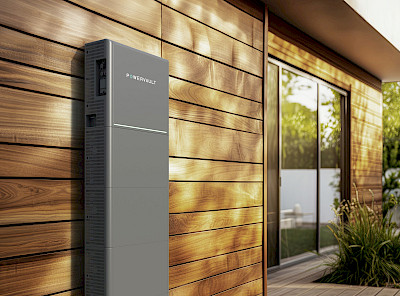
A system like the Tesla Powerwall 3 allows you to store excess solar energy during the day and use it in the evening when electricity is most expensive. It also allows you to access smart tariffs, where you can charge your battery overnight at very low rates and avoid peak prices completely.
In some cases, customers are paying under 10p per kWh overnight and completely avoiding peak rates of 35p – 40p. Without a battery, you simply cannot take advantage of this.
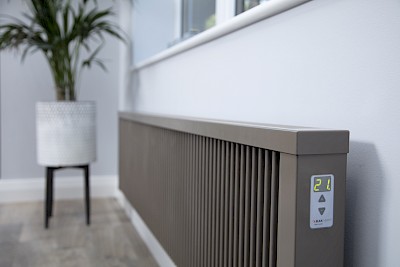
Electric heating is often seen as expensive, but that depends entirely on how it’s used. Our ELKATHERM® electric radiators are designed to work efficiently with solar panels and off-peak tariffs, allowing you to heat your home using cheaper or self-generated electricity.
For your hot water, Sunamp thermal storage systems can use surplus solar energy or low cost overnight electricity to heat water at mains pressure throughout the home. This means you’re not heating water during expensive peak hours.
A HeatElectric system is designed to work perfectly together: your solar panels generate electricity, your battery stores it, and your heating system uses it intelligently.
Smart tariffs are where the real opportunity lies. Instead of paying one rate all day, prices change depending on demand.
Electricity is cheapest overnight, and most expensive in the early evening. Export rates are highest during those peak times.
With the right setup, you can charge your battery when electricity is cheap and use (or even export) it when prices are highest. This is exactly how modern tariffs like Octopus Flux are designed to work.
The answer is no longer just solar panels. The most effective systems combinesolar generation, battery storage, smart heating and hot water, and a time of use tariff.
We can design a system for you; not just to generate electricity, but to reduce reliance on the grid as much as possible.
The biggest shift we’ve seen in 2026 is simple. Solar is no longer about what you export, it’s about what you do not have to buy.
The households seeing the biggest energy bill savings are the ones treating their home as a complete energy system, not just a set of panels on the roof. With the right combination of solar, battery storage, and smart tariffs, you can take real control of your energy costs for the long term.