Find your Local

We're a national brand with a local team in your area.
Select the location below that's closest to you:
Battery storage has become one of the most popular home energy upgrades in the UK. Whether you already have solar panels, or are simply looking to reduce your energy bills by tanking advantage of cheaper, off-peak tariffs, choosing the right home battery size is one of the most important decisions you will make.
Many homeowners assume that bigger is always better, but that isn’t necessarily true. An oversized battery can increase the cost of your system without delivering significantly greater savings. On the other hand, a battery that is too small may not store enough energy to power your home when you need it most.
The good news is that finding the right sized battery for your home is usually quite straightforward.
The easiest way to estimate the battery size you need is to look at your annual electricity consumption. You can find this information on your electricity bill, or by checking your smart meter account.
Once you have your annual consumption, divide it by 365 to work out your average daily usage.
For example, if you use 3,650kWh per year:
3650 ÷ 365 = 10kWh per day
This daily figure provides a helpful starting point when choosing a battery.
As a general rule, most homeowners benefit from a battery that can store between half and a full day’s electricity consumption.
For households using 8-12kWh per day, a battery of 10-13.5kWh of usable storage could be ideal.
The aim isn’t necessarily to store every unit of electricity you use. Instead, the goal is to store enough cheap energy or excess solar generation to cover the periods when electricity is most expensive.
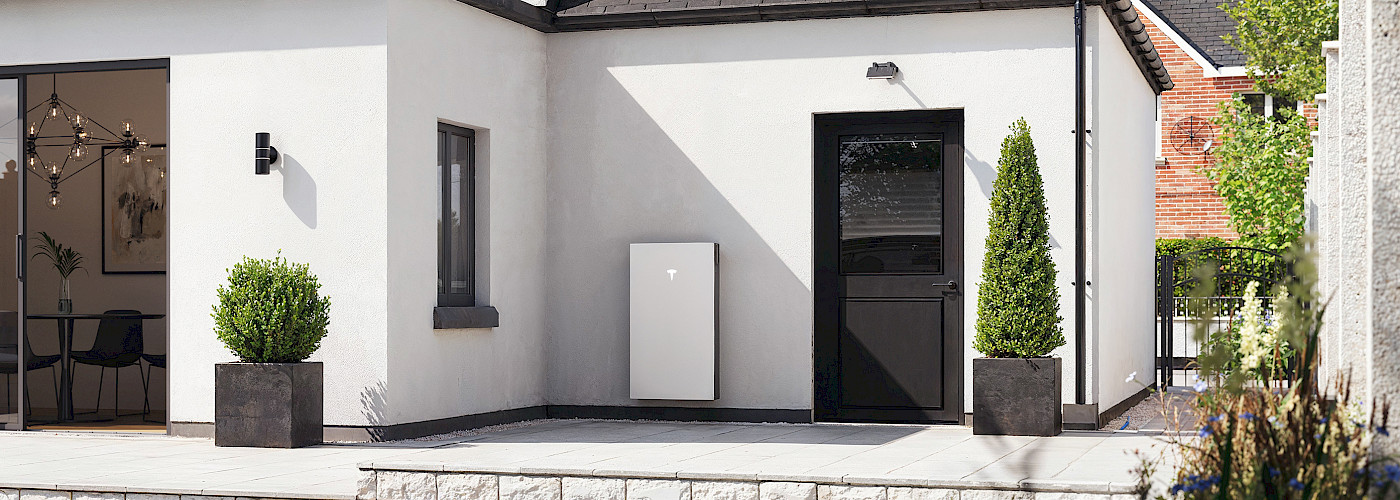
One reason the Tesla Powerwall 3 has become so popular is that its 13.5kWh capacity aligns well with the average electricity consumption of many UK households.
A home using around 4500kWh per year consumes roughly 12.3kWh per day, meaning a single Tesla Powerwall can store enough energy to cover most of a typical day’s usage. For many UK families, that allows the battery to charge overnight on a cheap tariff and power the home throughout the day.
If you already have solar panels, battery sizing can become slightly different.
Rather than focusing purely on your electricity consumption, you also need to consider how much surplus solar energy you generate.
Many homeowners without a battery find that they export a large percentage of their solar generation to the grid during the day when nobody is home. A battery allows this energy to be stored and used later in the evening when demand is higher.
In these situations, choosing a slightly larger battery can often improve self consumption and increase overall savings.
Modern electricity tariffs have changed the way many battery systems are sized.
With tariffs such as Intelligent Octopus Go, Octopus Flux and Eon Next Drive, homeowners can buy electricity at significantly reduced rates during certain periods.
Instead of relying entirely on solar generation, batteries can be charged overnight when electricity is cheaper and discharged during the day.
For many households, the battery effectively becomes an energy storage tank, allowing them to buy electricity when it is cheap and use it when prices are higher. The more electricity you use each day, the larger the battery you may need to maximise these savings.
One of the most common mistakes is assuming that the largest battery available will deliver the greatest return on investment.
If your household only uses 8kWh per day, installing 40kWh of battery storage may not provide enough additional savings to justify the extra investment. A battery should be sized around your actual energy usage patterns, rather than simply being as large as possible.
The best value systems are usually those that closely match the amount of electricity your home consumes each day.
Electric vehicles can significantly increase daily electricity usage, and may justify a larger battery.
Electric heating systems can also increase demand, particularly during winter months. Households with heat batteries, electric radiators, air source heat pumps or electric vehicle charging often require a more detailed assessment to ensure the battery is correctly sized.
Your lifestyle matters too. Someone who is at home all day will typically use electricity differently from someone who is out at work during daylight hours.
For many UK homes, a battery between 10kWh and 15kWh provides the best balance between cost and savings. A household using 4000 to 5500kWh of electricity per year will often find that a 13.5kWh battery (such as the Tesla Powerwall 3) is an excellent fit.
However, every property is different. The best battery size depends on your annual consumption, whether you have solar panels, your tariff, and how you use electricity throughout the day.
At HeatElectric, we design battery storage systems around your home’s actual energy usage rather than using a one-size-fits-all approach.
By analysing your annual electricity consumption, daily usage patterns, and available roof space for solar panels, we can recommend the battery size that offers the best return on investment and the greatest long-term savings.